A large-scale educational project was launched earlier this year at the Institute of Additional Education of the Volga Region University of Sports and Tourism. Within the framework of the grant of the Vladimir Potanin Charitable Foundation "Inclusive Sports for All", advanced training courses were organized under the program of additional professional education "Organization and implementation of sports and social projects of the Special Olympics", which the university implements jointly with the Special Olympics of Russia. About 2,440 specialists will be trained within three years.
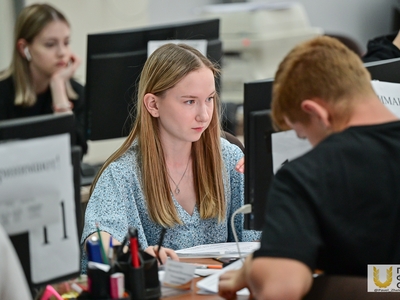
300 people representing 49 regions of the country were the first to "sit down at the desk". Classes were held in three shifts. In each of the conferences, listeners living in the same time zone were connected to one of the digital online platforms. The first, of course, were the residents of the Far East who began their studies, and so on…
- This project was conceived and implemented on the initiative of the President of the Special Olympics of Russia Olga Slutsker, - says the head of the Department of Adaptive Physical Culture and Life Safety Larisa Parfenova. - The cost of a 3-year contract is 14 million 850 thousand rubles. As part of the project, our department and representatives of the leading physical education universities of the country, together with the Institute of Additional Education, developed a unique program that was reviewed in various specialized organizations. Classes are conducted by both teachers of our university and invited experts from other regions, including heads of departments of AFC sports universities, as well as experts-practitioners of the Special Olympics of Russia and representatives of the Directorate of Sports and Social Projects. As a result of the program, an online course will be created, which everyone will be able to take later. Our common goal is for the Special Olympics movement of Russia, which is the flagship of the development of an inclusive society, to spread to all corners of the country, so that in every republic or region the right attitude to the problem of social integration of people with intellectual disabilities is formed. To date, there are SO branches in 64 regions of Russia. But not all of them are active. I would especially like to note that the program is designed for both those who already have experience working with special athletes and beginners. And in particular, for graduate students. The project turned out to be large-scale and informative! We conduct practical classes in online broadcasts from such remote corners of Russia as Yuzhno-Sakhalinsk. The courses have become a discussion platform in which specialists of correctional and adaptive sports schools, social service institutions, rehabilitation centers and even representatives of relevant ministries take part. People raise the most pressing issues, experts from Khabarovsk, Murmansk, Kaliningrad, Pyatigorsk and many others join the discussion. Students take an extremely responsible approach to the process, attend all classes. The round tables following the results of the two-week classes turned out to be very interesting, filled with discussions, where the listeners not only shared their impressions of the training, but also put forward a number of interesting proposals for the development of the special Olympic movement and the improvement of physical culture and sports work with people with mental disabilities.
By the end of the academic year, more than 800 people will be trained as part of the courses. It remains to add that the whole process is provided by the Institute of Additional Education, whose employees during the coronavirus pandemic have worked out to the smallest detail the learning process using distance learning technologies.
- Training is based on the educational platforms of the Institute of Additional Education, synchronously in online mode. Therefore, all students have the opportunity to take an active part in the course of classes, ask their professional questions to leading practitioners of the Special Olympic Movement," says IDO Director Elvira Rumyantseva.
The first week is an introduction to the basic terms and concepts, areas of activity of the Special Olympics, its goals and objectives, philosophy and development strategy, discusses the organization of AFC classes, examines the psychological, pedagogical and biomedical characteristics of persons with intellectual disabilities. The second week of training is practical and seminar classes. Of course, it is difficult to conduct practical classes in an online format, and our specialists have been preparing for the start of these courses for two months. Hours of videos were filmed, which reveal the methodological features of working with people with special needs. This applies both to the organization of training sessions (taking into account age, nosology), and the holding of mass sports events for people with intellectual disabilities. Each presented material is analyzed in detail and discussed by all participants of the educational process. The teachers of our University have all the necessary technical capabilities to conduct practical classes directly from specially equipped classrooms in real time. Of course, we understand that students cannot always join us within the framework of a very busy training schedule, so we provide an opportunity to familiarize themselves with the material covered in the recording. Anyway, at the end of the courses, everyone is waiting for the final test, which can be handled only by mastering all the course material.
I would like to note that representatives of the Potanin Foundation and the Special Olympics of Russia closely monitor the progress of the program, attend classes, and are interested in how many listeners are present.