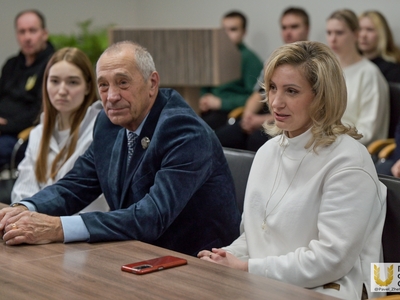
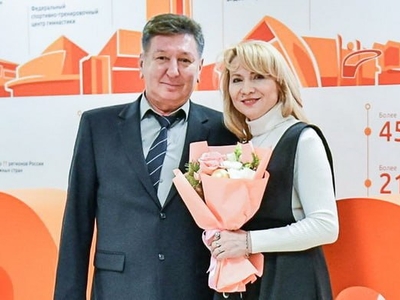
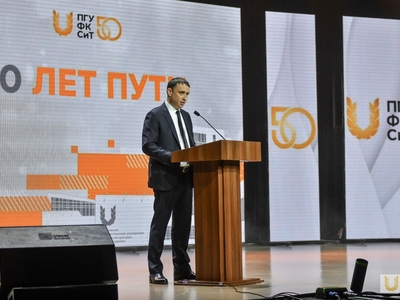
The year 2024 has been declared the Year of Family in our country. Within the walls of the Volga Region University of Sport and Tourism, over the fifty-year history of its existence, a lot of bright dynasties have formed, and we invite you to get acquainted with them in the new section "Generations of the Volga Region" in the University's Zen Channel.
Today we will learn about the life of the Kashapov family, in which the love of sport is united with the love of science.
In the sports community Ravil Kashapov is known as a master of sports of international class of the USSR in track and field athletics, three-time champion of the USSR, two-time winner of the European Cup, two-time world champion, as well as a participant of the 1988 Olympic Games in Seoul.
In the pedagogical community - as an associate professor of the Department of Medical and Biological Disciplines at the Volga Region University.
Daily communicating with students, most of whom are athletes, Ravil Kashapov proves by personal example that a successful athlete needs to be educated.
Sport in the Kashapov family is truly a family affair. The wife Svetlana and the eldest son Renat, who became a multiple medallist at Russian mountain running championships and a winner of a number of major All-Russian road races, took up athletics. His younger son Ruslan chose swimming rather than athletics, but even though he traded his cleats for flippers, he still followed in his father's footsteps and became a teacher.
As part of the column we offered Ravil Kashapov and his sons to answer a few questions to find out more about their attitude to sport, pedagogy and, of course, family.
How do the children of a successful athlete feel?
Does it prevent them from achieving success or, on the contrary, does it help and motivate them?
Ravil Kashapov: my children have always respected and supported me. Being the family of a high-class athlete can sometimes be difficult - I was often at competitions and training camps for long periods of time. It is very important to feel the support of your family - and I have always felt it. Later my children, as I think, willingly started to do sports because they saw me doing it, and years later it helped them to achieve success in running and swimming.
Renat Kashapov (eldest son): I felt proud. Not everyone's dad is an athlete of this level. When you see how outstanding your father is - there are hardly any marathon runners of his level - it is a strong motivation. I saw his level of discipline and, of course, I tried to emulate it. Even if not one hundred per cent. My father's successes did not hinder me - in track and field athletics the results depend only on yourself: how you train - so you run. Dad is my authority. If it wasn't for him, I would hardly have ended up in sport, as long-distance running is a very hard job that takes up a lot of energy and time.
Ruslan Kashapov (youngest son): I think I realised what a "successful athlete" is only at the age of nine, when I saw the Olympic Games in Atlanta on TV. What was my surprise when, after the Olympics, I learnt from the magazine "Run and We" that my dad was a multiple champion of the USSR, winner of the European Cup, participant of the World Championship and Olympic Games in marathon running! All these successes of my dad came at a time when I was attending kindergarten, and my mum told me that my dad was shown a lot on TV. It was sad that I didn't see it, but I remember very well how we were waiting for his arrival after the Russian and world championships in the 100 kilometre race: he came into the flat with a big bag on his shoulder and said with such a smile as if he hadn't run at all: "First!". At the same time you feel only feelings of pride and joy. This in no way hindered, restrained or limited me in sports. Dad's successes are my reference points in life.
How can a father - being an experienced sportsman and teacher - help his children?
Ravil Kashapov: I always tried to help my children, but I rarely came to their competitions. When your children perform, you worry even more than when your pupils perform. Being a coach is always harder than being an athlete, largely because you really want to go out there and run for them. You want to, but you can't. With kids, this feeling increases a hundredfold.
Renat Kashapov: Dad helped me in everything - from drawing up a training plan, to bureaucratic moments and specific advice. In general, my dad has always helped me in life.
Ruslan Kashapov: my parents put me in the swimming section when I was six years old. I remember coming home from school two years later and meeting my dad at the entrance to the entrance. He came running from training and said that I would no longer go to the frog, but would start attending the big pool. That's how I took my first steps in sports. Later on, my dad instilled in me the culture of proper nutrition, which I try to adhere to to this day. In addition, Dad helped me a lot in my studies, which, unfortunately, sometimes suffered due to active training and competition activities. Dad would help with lessons despite his busy training sessions, even when he had a training camp away the next day. Without his help, I wouldn't be the person I am.
What is your favourite thing about sport?
Ravil Kashapov: sport requires an individual approach. Each of us has different capabilities and abilities. Finding the right tactics to unlock a person's talents is a complex and interesting process, in which I find something creative for myself every time. But there is no room for self-pity in sport. In sport you have to work hard and work hard.
Renat Kashapov: sport makes you a strong, healthy and disciplined person, and also gives you the opportunity to travel and meet good people. Sport helps in life even in small things.
Ruslan Kashapov: I love the aesthetics of competition - in cyclic sports the synchronised movement of finishers looks very spectacular! I am sincerely happy for athletes who overcome various difficulties in an honest way and achieve the desired results.
How did you decide to become a teacher?
What is your favourite part of this activity?
Ravil Kashapov: I started teaching in 1983 - at that time I was sure that I had only come for a year, but I stayed for forty years. I consider my students my colleagues - sport brings us together and allows us to speak the same language. I always try to help them not only in academic matters, but also in sports.
Ruslan Kashapov: I never thought that I would become a teacher, but, literally right after defending my PhD thesis, I was gladly employed at the Department of Biomedical Disciplines. At the very beginning of my teaching activity, of course, I did not do without my father's advice and instructions for different cases of pedagogical life, as the specifics of teaching at a sports university were much different from my studies at Kazan State University. What I like most about teaching is to see how the students safely assimilate the material.
What is the most important thing in a family?
Ravil Kashapov: universal values are important in a family: faith in each other, support, respect and patience. If you are not understood and accepted at home, it will be difficult to succeed, because it is the "family rear" that gives you a sense of peace and support.
Renat Kashapov: family is a multifaceted concept associated with something kind and dear. Family is where you are always welcome and loved. The formation of a person as a personality begins with the family. I am proud of my parents. My wonderful mum is a support for my dad. Now I am a dad myself and I love my children very much. They also do sports - some professionally, some for health, but we all do it out of great love.
Ruslan Kashapov: for me, as for many people, family is the basis of the basics, the meaning of life and the foundation of everything. Most of my successes are due to the support of my family, for the sake of which I would like to roll mountains. The most important thing in a family is mutual understanding, trust and, of course, love.
Text: Daria Bezzubova