The Great Patriotic War was a crucial period in Russian and world history, transforming not only everyday life but also sports. As part of the 80th anniversary of Victory Day, we highlight the role of sport during the war and remember the country's heroes, their valiant deeds, and the key events that brought this memorable May day closer.
Athletes from Tatarstan, like all Soviet people, endured the harsh trials of the Great Patriotic War. Their athletic training, discipline, and steely character became powerful weapons on the battlefield. But their contribution was not limited to the front. Tatarstan athletes actively trained soldiers for the Red Army, holding paramilitary competitions and improving the physical fitness of young people.
Nikolai Teterkin began his military career at the age of 18, joining the front in 1942 and defending his homeland on the battlefield until 1947. As a junior lieutenant, he fought in the 4th Artillery Regiment of the 16th Guards Rifle Division.
After demobilization, he took up canoeing and achieved considerable success. He won and placed in the Soviet Union championships. The pinnacle of his athletic career was his participation in the first Summer Olympics for Soviet athletes in 1952, where he competed in the canoe double with Igor Feoktistov.
Vasily Matveyev was drafted into the NKVD troops in 1943 and joined the Dynamo sports society. During the war, sport was only part of mandatory training, but after the Great Victory, he became seriously interested in cross-country skiing. He became a multiple champion of the Tatar ASSR, a four-time world champion, and a three-time European champion. In total, the athlete won 241 gold, 50 silver, and 36 bronze medals of various denominations.
Pyotr Lukoyanov was born in the village of Derzhavino in the Laishevsky District and served throughout the war. He rose to the rank of responsible officer of the General Staff of the USSR Armed Forces and retired with the rank of colonel. After the war, he devoted himself to sports tourism and organized numerous expeditions, primarily to the Far North. His accumulated experience helped him train 18 Masters of Sport of the USSR. According to his students, he was not only a mentor to them but also a model of spiritual fortitude.
Boris Tsvei was born in 1914. During the Great Patriotic War, he was a senior lieutenant and platoon commander. In 1941, he was drafted into the army and sent to train in the Kazan Reserve Infantry Brigade No. 3. He participated in the liberation of Kaluga and Velikiye Luki.
He worked for 38 years at the Kazan Institute of Chemical Technology in the Department of Physical Education, 22 of which he served as the department head. He was one of the pioneers in the development of artistic gymnastics in Tatarstan and made a significant contribution to the military and sports education of young people. In interviews with journalists, he repeatedly noted that thanks to regular sports in his youth and physical education in his old age, he was able to celebrate his centenary.
Isaak Bren was born in 1917. He was drafted into the Red Army and served in the Great Patriotic War with the 107th Rifle Regiment of the 55th Voroshilov Division. He was captured twice, but successfully escaped. From 1952, he worked as a coach for the Dynamo sports society and then as chairman of the Kazan City Committee for Physical Culture. In 1966, he was appointed the first director of the fencing school, which, under his 20-year leadership, became one of the leading schools in Russia. He was recognized as an Honored Worker of Physical Culture of the Tatar ASSR.
Alexander Shakhnazarov entered the Great Patriotic War at the age of 14. From 1942, he served in the Volga Military Flotilla of the Stalingrad Fleet. In 1944, he volunteered for military service and was sent to the artillery school, after which he served as a platoon commander in the 819th Artillery Regiment.
After the war, he worked for a long time at the Kazan Suvorov Military School as the head of the physical training department, and then as deputy head of the physical education department. After his discharge from the reserve, from 1978 to 1996, he worked at the Kazan Aviation Institute as a senior lecturer in the physical education department. He made a significant contribution to the military and sports education of Suvorov cadets and students.
In the post-war years, it was these battle-hardened heroes who achieved a new feat – they returned to sport and laid the foundations for future international victories, bringing Tatarstan to the world stage.
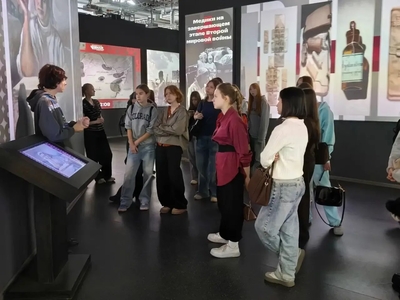
Based on materials from the Volga Region University exhibition dedicated to Tatarstan sports veterans who participated in the Great Patriotic War, as well as biographical articles on the information resource "BUSINESS Online."
Photo: National Museum of the Republic of Tatarstan