


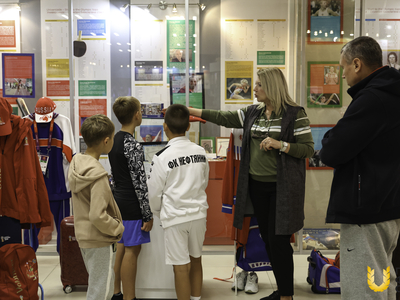
At the end of summer, gathered these days at the site of the Volga sports Academy, hundreds of promising students of Tatarstan. One of the educational formats offered to the participants is the so-called professional tests from the teachers of the leading Russian universities. Among the speakers was a lecturer in the Department of theory and methodology of cyclic sports Povolzhskaya Academy Dmitriy Drojetskiy.
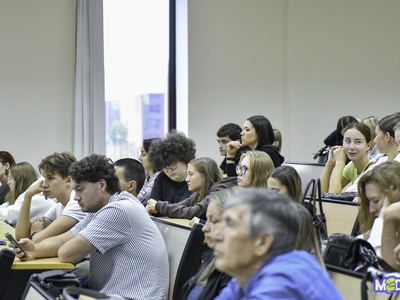
Familiarity with the profession sports coach Drojetskiy built in dialogue with the talented children from indicating that athletic trainer is a profession of the future. Students who will soon have to decide on their future profession, themselves talked about what knowledge and qualities should have a coach. Dmitry Drojetskiy told the children about their own experience. The specialist focused on the main responsibilities of the coach, professional ethics and an important component of the success of the wards – the degree of trust in the mentor.
The schoolgirl of the 11th class of school №5 of Kukmor Aigul Nasyrova shared their impressions:
- Today I learned that a real coach is a person who knows how to think creatively. You need to know the psychology and take into account a lot of interpersonal relationships. In this profession I am attracted to the feeling of belonging to the fate of another person. The coach is a mentor who is responsible not only for the physical condition of the ward, but also for his mood, spiritual growth. I really want to help people be happier and see how they succeed. After drawing up a portrait of a sports coach, I realized that I could become one, because I have many similar features.
Dmitry Drojetskiy was satisfied with the master class:
- At the master class came those who wanted to hear for themselves something practical in terms of the coach, and not just listen, as they say, for the overall development. All of them are engaged in sports, so they are potential students of the Volga region Academy. I regard my speech to them as part of the career guidance work that we do all year round. First, we made a portrait of the coach, giving him the qualities that, in their opinion, a representative of this profession should have. Based on this model, I tried to show them what qualities are really important for the coach, help him to achieve success, and which are not so important. At the same time, he built his argument on specific examples from the practice of leading swimming coaches, with whom he is personally familiar. Gave their statements, practical experience. The main emphasis was made on the creative nature of the coach's profession. We talked about how the work of the coach will change in the next decade, about how new digital technologies will affect it. Here I found that many children see the main function of the trainer as controlling, considering that in the future the trainer will be able to replace completely the computer program. But talking about the creative component of the profession, I tried to convince them that the machine will never be able to replace a person…
Read more
09/17/2026 - 20:52
09/16/2026 - 17:16
09/16/2026 - 16:15